About
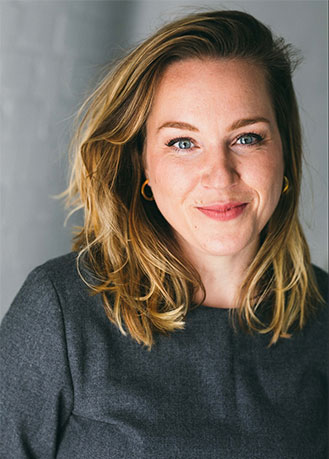
Katinka Versendaal
I am a designer and researcher working at the intersection of ecological transitions, food- and water systems, and more-than-human relations. My practice makes visible the entanglements between human communities and the ecosystems that sustain them, and builds the structures, narratives, and collaborations needed for regenerative change.
Food and water are my primary media. Not as ends in themselves, but because they are the most direct, daily, and intimate points of contact between humans and the natural world. Through the simple act of eating and drinking, the world around us becomes incorporated into our physical bodies. That proximity makes them powerful instruments for making abstract ecological crises tangible, for building communities around shared dilemmas and questions, and for rehearsing other ways of living together.
I hold a BA in Product Design from Design Academy Eindhoven and an MA in Food Design & Innovation from Scuola Politecnica di Design, Milan. I teach, write, curate, and make.
Our Vision
Our Philosophy
In order to live, we must eat. In order to live, we must drink. These are the most fundamental acts connecting us to the natural world. Through them, the world enters our bodies. The quality of the soil, the health of a river, the state of an ecosystem become part of who we are, metabolically, daily, even if we might not be aware of it.
The systems that make this possible remain largely invisible. The logic and structures of industrial capitalism have shaped how we perceive and value the world around us, often reducing nature to a resource, something outside of ourselves, cheap and seemingly endless. This imagination shapes not only how we produce and consume, but how we exist in this world and how we imagine its future.
My work starts where these entanglements become invisible. I seek out the ecosystems, communities, and relationships that are overlooked, taken for granted, or under pressure, and I make them tangible. Working with fishermen, farmers, ecologists, chefs, policymakers, and the more-than-human beings and entities that sustain our food and water systems, I develop narratives, experiences, and collaborative structures that invite people to see, feel, and understand their place within a living system. And in exchange, create the conditions for life to thrive.
The rethinking of our relationship with food and water should be rooted in a greater awareness of the entanglements of the life systems they depend on. And on a curiosity for what we can learn from those who have always known this: the fishing communities whose knowledge of a river runs generations deep, the farmers whose daily practice is one of interspecies care, the microbial life that makes fermentation, soil health, and clean water possible in the first place.
A regenerative transition begins with this recognition. It asks us to move from extraction to reciprocity, from separation to entanglement, from designing for human needs alone to designing with the needs of all life in mind. It builds upon the realization that one cannot create a future on their own, but solely collectively. The ambition is not a single world with a single answer, but a world where many worlds fit. Where local knowledge, ecological intelligence, and collective imagination can coexist and inform the systems we build.
Clients